
Appreciate It or Appreciated It? The Ultimate Guide To Choosing The Right Phrase
In our fast-paced world, where we often overlook the little things, the concepts of Appreciate It or Appreciated It take center stage. This article will delve into the nuances between actively appreciating the present moment and reflecting on past gratitude.
By the end, you’ll have a clearer understanding of how both mindsets can enhance your well-being and relationships.
What Is the Difference Between “Appreciate It” and “Appreciated It”?
The phrases Appreciate It or Appreciated It may seem interchangeable, but they hold distinct meanings that can subtly influence communication dynamics. “Appreciate it” serves as a present acknowledgment, expressing gratitude in the moment.
This can create a sense of immediacy and connection, emphasizing the value of an action or gesture right when it occurs. For instance, saying “I appreciate it” when someone holds the door open establishes a rapport, making the recipient feel recognized and valued.
On the other hand, “appreciated it” reflects a past sentiment, often signaling reflection or closure. It’s a way to convey gratitude after the fact, like when you thank a friend for a wonderful dinner days later.
This expression can evoke warmth and nostalgia, perhaps rekindling fond memories or emphasizing how much a past act meant to you. Understanding these nuances not only enhances your communication but also allows for deeper relationships, ensuring your appreciation resonates in the right context.
| Phrase | Tense | Meaning |
| Appreciate It | Present Tense | You are thankful right now |
| Appreciated It | Past Tense | You were thankful in the past |
Understanding “Appreciate It”
When someone helps you today and you want to express gratitude immediately, you say:
“I appreciate it.”
This means your appreciation exists in the present moment.
Examples:
- I appreciate your support.
- I appreciate it when you help me.
- Thanks for answering so quickly. I appreciate it.
Understanding “Appreciated It”
This phrase refers to something that happened in the past.
Examples:
- I appreciated your advice during college.
- We appreciated the opportunity last year.
- She appreciated the help when she needed it.
The appreciation occurred at an earlier time.
Why People Confuse These Two Phrases
Many people often mix up the phrases Appreciate It or Appreciated It leading to confusion in everyday conversation. The crux of the misunderstanding lies in the subtle difference in tense and usage.
“Appreciate it” is a present-tense expression that conveys immediate acknowledgment and gratitude for someone’s actions or efforts, making it feel relatable and spontaneous. For instance, when someone holds a door open, saying “I appreciate it” reflects a current sense of gratitude, fostering connection in the moment.
On the other hand, “appreciated it” occupies the past tense, indicating that the appreciation has already been established. This phrase tends to create a sense of distance; you acknowledge what someone has done, but the moment of gratitude has passed.
Common Mistake
Incorrect:
Thank you for helping me today. I appreciated it.
Correct:
Thank you for helping me today. I appreciate it.
Because the gratitude is being expressed now, the present tense is appropriate.
Another Common Error
Incorrect:
I appreciate your help last year.
Correct:
I appreciated your help last year.
Since the event happened in the past, the past tense is required.
Why Context Matters
The correct phrase depends entirely on when the appreciation occurred.
Ask yourself:
- Is the gratitude current?
- Or am I talking about a past event?
The answer determines which phrase you should use.
When to Use “I Appreciate It”
The phrase “I appreciate it” can transform everyday interactions into meaningful exchanges when used thoughtfully. It transcends mere acknowledgment; it conveys genuine gratitude, often enhancing relationships in both personal and professional settings.
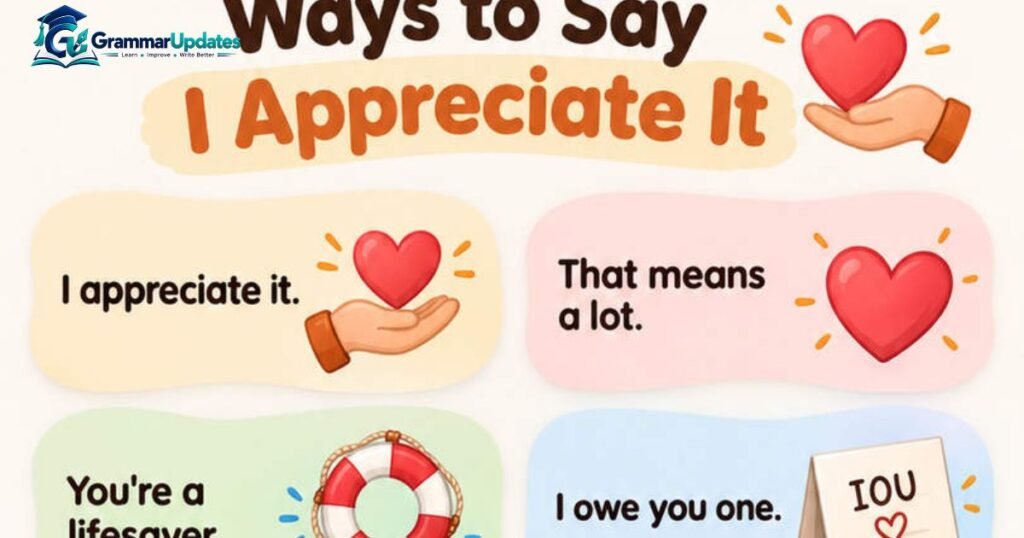
Utilizing this phrase during critical moments such as after receiving support from a colleague on a challenging project or when a friend offers emotional comfort reinforces the value of their contribution. It’s more than a polite response; it acts as a micro-affirmation that fosters a sense of connection.
In Daily Conversations
This phrase is commonly used when thanking someone in real time.
Examples:
- Thanks for opening the door. I appreciate it.
- Thanks for your patience. I appreciate it.
- Thanks for listening. I appreciate it.
In Professional Emails
Business communication frequently uses this phrase Appreciate It or Appreciated It because it sounds polite and professional.
Example:
Thank you for reviewing the document. I appreciate it.
In Customer Service
Companies often use this expression to acknowledge customer cooperation.
Examples:
- We appreciate your feedback.
- We appreciate your patience.
- We appreciate your continued support.
Why It Sounds Natural
Native English speakers often prefer concise expressions. “I appreciate it” communicates gratitude clearly without sounding overly formal.
When to Use “I Appreciated It”
Using “I appreciated it” can often convey a deeper sense of gratitude than the more casual “I appreciate it.” This phrase is particularly effective when you’re reflecting on a meaningful experience.
For instance, when someone goes out of their way, perhaps by offering emotional support during a tough time, saying “I appreciated it” acknowledges the past action and the weight it held in that moment. This subtle distinction can resonate more profoundly, reinforcing the impact of their kindness.
Moreover, “I appreciated it” can also serve as a bridge in relationships. When you’re expressing gratitude for something specific be it a thoughtful gesture or valuable advice this phrasing adds an element of sincerity that can strengthen connections.
Referring to Past Experiences
Use this phrase when discussing appreciation (Appreciate It or Appreciated It) that existed during a previous event.
Examples:
- I appreciated your guidance during my first job.
- We appreciated the opportunity to collaborate.
- He appreciated the encouragement from his coach.
In Storytelling
Past tense is essential when describing events that already happened.
Example:
During my internship, I appreciated every chance to learn from experienced professionals.
In Reflections and Reviews
People often use “appreciated it” when reflecting on experiences.
Examples:
- I appreciated the support I received after graduation.
- They appreciated the flexibility offered by the company.
Why It Fits Historical Contexts
The phrase signals that the appreciation belongs to a completed period of time.
Grammar Rule Behind “Appreciate It or Appreciated It”
The distinction between Appreciate It or Appreciated It lies in the nuances of time and context. “Appreciate it” is used in the present tense, indicating ongoing gratitude or recognition of value.
This phrase is a way to acknowledge someone’s efforts or kindness in real time, making it feel immediate and personal. When you say, “I appreciate it,” you’re actively engaging with the moment, enhancing the emotional connection between you and the person being thanked.
Conversely, “appreciated it” shifts the focus to a completed action. This past tense form implies that your gratitude was felt after something specific occurred perhaps you’re reflecting on a deed done previously. Using “appreciated it” can convey a deeper sentiment, as it suggests a thoughtful acknowledgment of past kindnesses.
Understanding the grammar makes the choice easy.
Present Tense Rule
Use:
I appreciate it.
When:
- The action is happening now.
- The feeling exists now.
- The gratitude is current.
Examples:
- I appreciate your effort.
- I appreciate your honesty.
- I appreciate your quick response.
Past Tense Rule
Use:
I appreciated it.
When:
- The appreciation existed in the past.
- The event is completed.
- You are describing history.
Examples:
- I appreciated your support during college.
- We appreciated the opportunity last year.
- She appreciated the kindness shown to her.
Explain: In-Person vs In Person: What’s The Difference
Quick Memory Trick
Think:
Now = Appreciate It
Past = Appreciated It
This simple rule works almost every time.
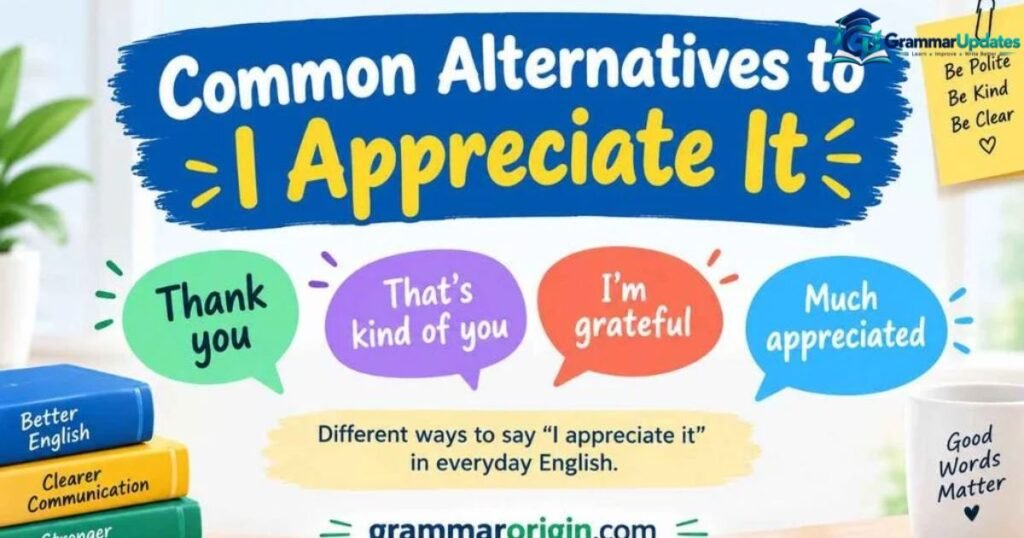
Common Alternatives to “I Appreciate It”
Expressing gratitude doesn’t always have to revolve around the phrase “I appreciate it,” which can become repetitive in everyday interactions. Instead, consider phrases like “Your support means a lot to me.”
This variation not only conveys gratitude but also adds a personal touch, reinforcing the emotional weight behind your appreciation. By acknowledging the impact of someone’s assistance, you create a deeper connection that invites them to feel valued.
Additionally, saying “I’m grateful for your help” opens up a dialogue about gratitude that feels more genuine. It shifts the focus from a simple acknowledgment to a recognition of the effort the other person put in.
This deeper expression can enhance relationships, whether in professional settings or personal connections. By diversifying your vocabulary around appreciation, you elevate the experience for both you and the recipient, transforming ordinary exchanges into memorable moments.
Sometimes you may want variety.
If you are interested you can see Defence or Defense: Which Spelling Is Correct.
Professional Alternatives
- Thank you for your assistance.
- I sincerely appreciate your help.
- Your support is greatly appreciated.
- Thank you for your time.
Casual Alternatives
- Thanks a lot.
- Much appreciated.
- Thanks, I really appreciate it.
- I can’t thank you enough.
Formal Alternatives
- I am grateful for your support.
- Please accept my sincere appreciation.
- I am thankful for your assistance.
Using alternatives can make your writing more engaging while preserving the same meaning.
Self Assessment
Fill in the blanks with the correct phrase:
- Thanks for sending the documents. _______!
- I really _______ when you helped me last week.
- Appreciate it for your quick response yesterday.
- I _______ your advice on the project.
- _______ that you covered my shift today.
Key Answers
- Appreciate it – present, immediate gratitude
- Appreciated it – past action
- Appreciate it – current or recent action
- Appreciated it – past reflective action
- Appreciate it – present context
Conclusion
In today’s fast-paced world, (Appreciate It or Appreciated It) taking a moment to appreciate the small things can make a significant difference in our overall well-being. Whether it’s a simple act of kindness or the beauty of nature, acknowledging these moments allows us to cultivate gratitude and mindfulness in our daily lives.
When we say we appreciate something, we foster a deeper connection not just with our surroundings but also with ourselves. This practice can enhance our mood and remind us of the positive aspects of life, even during challenging times. So, let us make it a habit to express appreciation regularly and see how it transforms our outlook on life.
FAQs
What is correct, appreciate or appreciated?
Both “appreciate” and “appreciated” are correct, but their usage depends on the context. “Appreciate” is the present tense, often used when expressing gratitude, while “appreciated” is the past tense, used to describe something that has been valued or acknowledged previously.
Is it right to say “I appreciate it”?
Yes, it’s perfectly fine to say “I appreciate it” to express gratitude. It conveys acknowledgment and thanks for someone’s help or kindness effectively.
How do I say I really appreciate it?
You can say, “I truly appreciate your help; it means a lot to me.” Alternatively, try, “Thank you so much for your kindness; I genuinely value it.”
Is “I really appreciate it” grammatically correct?
Yes, “I really appreciate it” is grammatically correct. It effectively expresses gratitude and is commonly used in both spoken and written English.